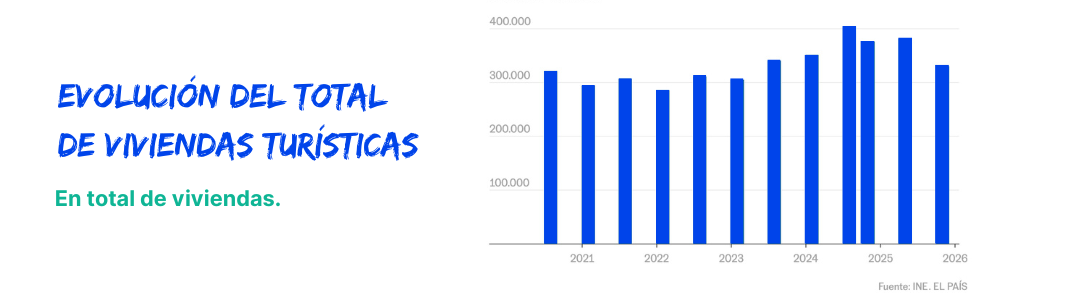
Spain is experiencing a significant drop in the number of tourist accommodations advertised on digital platforms, according to the latest data from the National Institute of Statistics (INE). Between November 2024 and November 2025, the total number of properties stood at 329,764, representing a reduction of almost 47,000 homes and a year-on-year decrease of 12.4%, the largest relative decline recorded since this experimental statistic began being compiled.
This reduction in supply also translates into a loss of tourist accommodation places, which have fallen compared to previous periods, and into a decreasing weight of these accommodations on the total residential stock in Spain.
Why has this drop occurred?
Stricter regulation
Authorities have implemented a stricter regulatory framework to regulate vacation rentals. Measures such as the mandatory registration of a Single Registry of Short-Term Rentals and the reform of the Horizontal Property Law, which gives communities more power to veto this type of accommodation, are contributing to a reduction in supply.
Offensive against unregistered ads
The deployment of monitoring platforms and mandatory registration have also made it possible to identify and demand the removal of thousands of listings that do not comply with legal requirements. The Government and the Ministry of Housing and Consumer Affairs have intensified notifications to platforms to remove unregistered rentals, which has resulted in a significant reduction in listings visible on portals such as Airbnb, Booking, and Vrbo.
Objective measurement using web data
The INE data is compiled using techniques such as web scraping on the main accommodation platforms (Airbnb, Booking, Vrbo/Expedia), filtering duplicates and selecting only those homes that, in principle, comply with the regulations in force in each community.
Is this a uniform trend across the country?
The reduction is not observed identically in all regions. Communities such as Andalusia, the Canary Islands, and the Valencian Community continue to concentrate a significant volume of tourist accommodation, although they too have experienced declines in their absolute numbers.
Even more striking cases are recorded in specific areas such as Ibiza, where the number of detected advertisements has dropped significantly, reflecting a more intense impact of the planning and control policies.
What does this trend mean?
This decline can be interpreted as a reorganization of the holiday rental market under stricter legal compliance and data transparency standards. In a context where housing is a sensitive issue—given the shortage of available residential properties for permanent residents and the pressure on prices—these figures may indicate a structural shift in the balance between tourist accommodation and housing for residents.
Beyond the numbers
Although the year-on-year decline is historic, the total volume of tourist accommodation remains significant both nationally and in key destinations. The statistics reflect changes in market dynamics, driven by regulatory measures, demand trends, and social pressure to curb the proliferation of tourist rentals in highly sought-after urban and holiday areas.
Contact us nowand discover how Bookipro helps you keep this and other procedures under control in an increasingly regulated and demanding environment, while you focus on daily management.